
The Ethics of Urgency Marketing — How to Use Timers Without the Sleaze
The problem with fake countdowns isn't the timer — it's the lie behind it. Here's how to use urgency in a way that builds trust instead of destroying it.
"I hate fake countdowns."
If you've ever said that, you're not wrong. Timers that reset every time you reload the page. Deadlines that pass and the offer is still available the next morning. "Only 3 spots left" — forever. It's manipulative, and your audience knows it.
But here's what's worth separating out: the problem isn't the timer. It's the lie behind it.
Real Urgency vs Manufactured Urgency
There are two kinds of urgency, and the difference matters enormously.
Real urgency is grounded in a constraint that's actually true:
- The enrollment closes Friday because the cohort starts Monday and you need to prepare
- The bonus disappears at midnight because you said it would and you're keeping that promise
- The discount expires in 72 hours because that's the new subscriber window you defined
Manufactured urgency is made up:
- The countdown resets when you clear your cookies
- The "sale" that's been running for six straight months
- The "limited spots" on a digital course with unlimited capacity
Real urgency builds trust over time. Manufactured urgency destroys it, often permanently.
Why Ethical Timers Actually Convert Better Long-Term
Here's the counterintuitive truth: when you consistently honor your deadlines, your timers become more effective over time, not less.
Subscribers who've seen you follow through — the bonus actually disappeared, the price actually went up — will act faster on the next timer because they believe it's real. They've been trained by your consistency to take your urgency seriously.
Fake urgency does the opposite. It trains subscribers to ignore the timer, to know the sale will come back, to wait because "it'll be there next week too." Once you've established that pattern, no amount of urgency copy will fix it.
What an Ethical Timer Looks Like in Mila
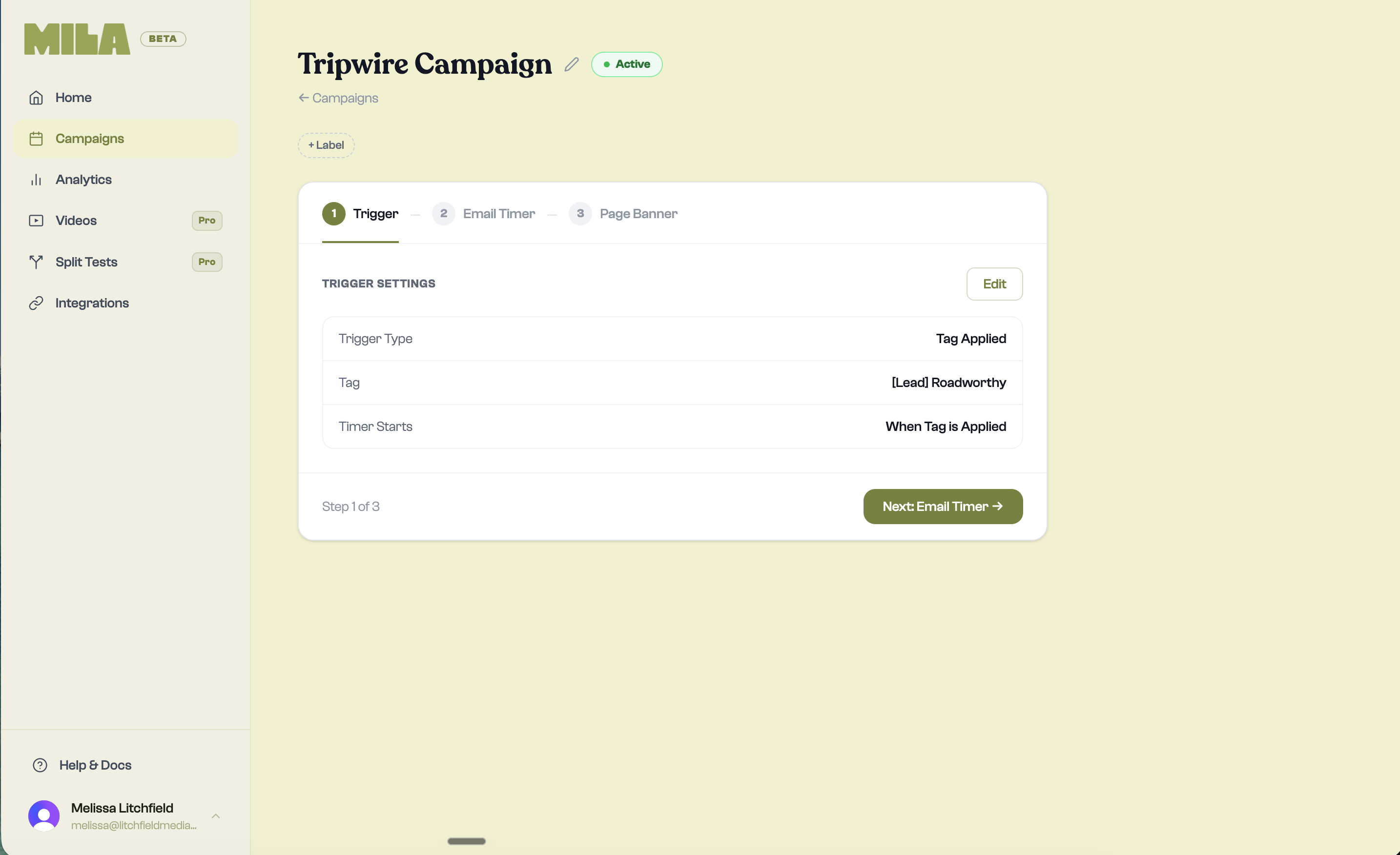

Three Examples of Ethical Urgency in Practice
1. The evergreen webinar bonus window Someone watches your automated webinar on a Tuesday. The replay page shows: "Your Q&A session access expires in 48 hours." That 48-hour window started when they registered — it's tied to their specific watch date. When it hits zero, the Q&A is gone. It was never available to everyone forever. It was available to them, for 48 hours, because they watched.
2. The live launch cart close "Cart closes Friday at midnight." This is simple — it's true, and you honor it. No "we got so many requests, we're extending it" emails on Saturday morning. When you say it closes Friday, it closes Friday. Every future launch, your audience moves faster because they know you mean it.
3. The welcome sequence discount A new subscriber joins your list and receives a 20% discount code in their welcome email: "This offer is available for your first 72 hours." An evergreen timer in the email shows their personal countdown. At 72 hours, the discount code expires in your checkout system. It wasn't a trick — it was a real offer with a real window.
The Questions to Ask Before Adding a Timer
Before you add a countdown to any campaign, run through this:
- Will I actually honor this deadline — no exceptions?
- Is the urgency tied to a real constraint (limited seats, real price change, genuine bonus removal)?
- If my most skeptical subscriber tested this, would the deadline hold?
- Would I be embarrassed if my best client saw this?
If you answer yes to all four, your urgency is ethical. If you hesitate on any of them, fix the constraint before you add the timer.
What to Do When the Timer Expires
The thing that makes ethical urgency work — and what most marketers skip — is actually following through.
When the timer hits zero:
- Remove the bonus (or make it unavailable at checkout)
- Apply the price increase (or remove the discount code from your checkout)
- Close enrollment (even if you want more signups)
This is uncomfortable, especially if you're leaving money on the table. But every time you honor a deadline, you're making your next campaign more effective. The reputation for keeping your word is worth far more than the extra sales from quietly extending the window.
Mila is built for marketers who keep their promises. Every timer fires once and counts down honestly — no resets, no tricks. Try it free →
Ready to try Mila?
Create your first branded countdown timer in under 10 minutes. Free to start.
START FOR FREE